The digital health industry is booming. Telemedicine platforms, remote patient monitoring services, and digital wellness apps need skilled professionals – medical consultants, mental health practitioners, health coaches, content creators, and technical specialists. If you have expertise in healthcare or wellness, opportunities to work with these platforms are abundant.
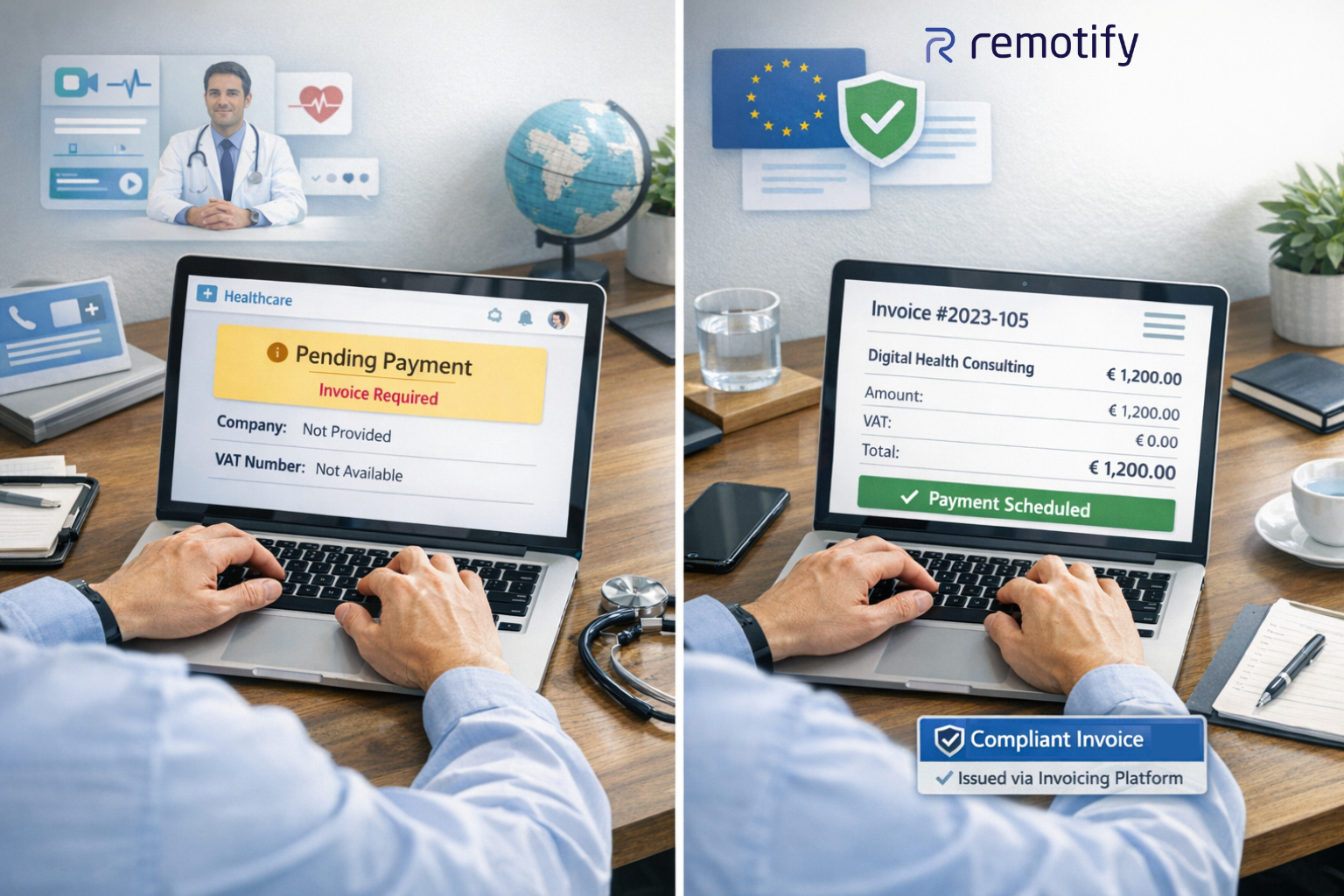
But there’s a catch: most digital health platforms require proper invoices to process payments. And if you’re an independent professional without a registered company, this requirement can feel like a roadblock. You have the skills, you’ve landed the opportunity, but now you’re stuck trying to figure out how to invoice professionally without setting up a formal business entity.
The good news is that being an independent professional doesn’t mean you need to incorporate a company just to get paid. This guide explains how you can work with digital health platforms and receive payment through practical invoicing solutions- even without your own registered business.
Before exploring solutions, it’s important to understand why digital health platforms insist on proper invoices in the first place.
Digital health platforms are businesses, and like all businesses, they need clean financial records. When they pay you for your services, that payment becomes a business expense. To claim this expense for tax purposes, they need an official invoice that shows:
Without a valid invoice, the platform can’t justify the expense to tax authorities or their accountants. This isn’t just bureaucracy – it’s a fundamental requirement of running a legitimate business.
Digital health platforms must comply with various regulatory and audit requirements. These frameworks often extend to financial practices and record-keeping.
When auditors review a digital health platform’s operations, they examine financial documentation. Each expense must be properly documented with compliant invoices. If a platform pays contractors without proper invoices, it raises red flags during audits and can lead to:
Platforms protect themselves by requiring professional invoices from everyone they pay.
You might wonder: “Can’t the platform just send me the money directly?” In most cases, no. Here’s why:
Tax reporting obligations: In many jurisdictions, businesses must report payments to contractors. For example, in the United States, if a company pays you $600 or more in a year, they must file a 1099 form reporting that income. They can’t do this without proper documentation.
Accounting software requirements: Modern businesses use accounting software that requires invoice uploads for every expense. The software literally won’t let finance teams process payments without an invoice to attach.
Internal controls: Larger platforms have internal approval processes where payments must be matched to invoices. This prevents fraud and ensures every payment is authorized.
Legal protection: Invoices serve as transactional records. They document what services were agreed upon and paid for, providing important documentation for both you and the platform if questions arise later.
The bottom line: if you want to work with professional digital health platforms, you need to provide proper invoices. No exceptions.
Now that we understand why invoices are necessary, let’s look at the specific challenges independent professionals face when trying to meet this requirement.
In many countries, becoming a registered business or obtaining “autonomo” (self-employed) status involves:
For someone just starting to work with digital health platforms, or someone doing this work part-time alongside other activities, these requirements can be overwhelming and expensive. Monthly social security contributions alone might cost €200-400, even if you’re only earning €500-1,000 monthly from platform work.
Digital health platforms often ask for:
If you don’t have a registered company, you simply can’t provide these documents. This creates a frustrating situation where you have the skills and the opportunity, but can’t proceed because you lack the formal business structure.
If you’re working with digital health platforms based in other countries, complexity increases dramatically:
VAT questions: Should you charge VAT? At what rate? If you’re not VAT-registered, can you even charge it? Different countries have different rules for services provided cross-border.
Payment currency: The platform wants to pay in their currency (USD, EUR, GBP), but you need to receive money in your local currency. How do you handle exchange rates and conversion fees?
Tax treaty complications: Some countries have tax treaties that affect how cross-border professional services are taxed. Without proper knowledge, you might end up paying taxes in both countries.
Invoice compliance: A simple invoice you create might not meet the legal requirements of the platform’s country, causing rejection and payment delays.
These cross-border complexities make independent professionals hesitant to pursue international opportunities, even when platforms are willing to work with them.
Even after you submit an invoice, problems arise:
These delays damage professional relationships. Platforms prefer working with contractors who have smooth, professional invoicing processes. If you’re constantly causing administrative headaches, they might look for someone else.
Here’s the solution that’s emerged for independent professionals: using third-party invoicing and payment platforms that act as intermediaries between you and your clients.
Instead of creating your own company, you work with a platform that provides invoicing and payment facilitation services. Important: The platform acts as an invoicing and payment intermediary – you remain the service provider delivering the actual professional services to the digital health platform.
Here’s how it works:
You receive payment for your work, and the digital health platform gets proper invoices for its accounting. The underlying professional services are provided by you, while the platform facilitates the invoicing and payment process.
Many of these third-party invoicing platforms operate through Estonian entities. Why Estonia specifically?
Digital infrastructure: Estonia pioneered e-Residency and has one of the world’s most advanced digital business infrastructures. Companies can be managed entirely online.
EU status: An Estonian company is a European Union entity, which means its invoices can be structured to meet EU invoicing standards. This can make them more readily acceptable to digital health platforms operating within Europe, though acceptance always depends on the specific platform’s policies.
Low administrative burden: Estonia has streamlined business requirements compared to many other EU countries. This allows invoicing platforms to operate efficiently and keep costs lower for users.
Established trust: Estonia’s e-Residency program has been running since 2014 and has gained recognition. Digital health platforms often recognize Estonian business entities as legitimate invoicing entities.
When you use an Estonia-based invoicing platform, the platform typically has an Estonian company that serves as the invoice issuer. Your invoice comes from this Estonian entity, which can provide EU-standard invoicing and facilitate compliance with European invoicing requirements.
The key mechanism is simple: the invoicing platform generates the invoice with the company information as the billing entity, while clearly documenting that the professional services were performed by you.
This structure can help satisfy various requirements:
For the digital health platform: They receive an invoice from a registered business entity with standard invoicing information and structure.
For you: You can work without needing to register your own company, subject to your local tax and legal requirements for independent work.
For record-keeping: The transaction is documented through the invoicing platform’s business entity, while you maintain records of your income for your personal tax obligations.
The invoicing platform also handles payment logistics:
This payment facilitation means you don’t need to navigate:
The platform handles these aspects, and you receive your payment in your local currency through a method that works for you (bank transfer, PayPal, Wise, etc.).
Note that you should verify local regulations regarding when company registration becomes necessary in your jurisdiction, as requirements vary by country and income level.
To avoid payment delays and misunderstandings, have a clear conversation with the digital health platform before you start work. Here’s what to discuss:
Ask specifically: “I work through an invoicing platform based in [Estonia/wherever your platform is based]. They will issue the invoice on my behalf from their registered EU company. Is this acceptable for your accounting and compliance requirements?”
Get written confirmation (email is fine) that they accept this arrangement. Forward this confirmation to your invoicing platform so they’re aware and can structure the invoice appropriately.
If the platform has concerns, ask what specific information they need on the invoice to make it acceptable. Your invoicing platform can often accommodate reasonable requests for additional documentation or specific formatting.
VAT (Value Added Tax) can be complex for cross-border services. Clarify:
Should VAT be charged? If your invoicing platform is EU-based and the digital health platform is also in the EU, different rules apply than if one party is outside the EU.
What VAT rate? Rates vary by country and service type. Health services sometimes have special VAT treatment.
Who accounts for VAT? In some EU cross-border transactions, the reverse charge mechanism applies, meaning the recipient accounts for VAT rather than the supplier charging it.
Invoice format requirements? Some platforms need invoices in specific formats (PDF, particular layouts, certain information in certain positions). Confirm what they require.
Your invoicing platform should be able to handle these requirements, but they need to know what’s expected beforehand.
Establish clear expectations:
Currency: What currency does the platform prefer to pay in? If they’re US-based and want to pay in USD, but your invoicing platform prefers EUR, there might be currency conversion involved. Understand who bears the conversion cost and at what rate.
Payment terms: Are they paying on receipt (immediate), Net 15 (15 days after invoice), Net 30, or some other timeline? Factor this into your cash flow planning.
Payment method: How will they pay the invoicing platform? SEPA transfer, international wire, PayPal? Some methods are faster and cheaper than others.
Payout timeline to you: After the platform pays the invoice, how long until you receive funds? Most invoicing platforms pay out within 24-72 hours, but confirm this.
Some digital health platforms need extra documentation beyond the invoice:
Contracts: They may want a service agreement outlining the scope of work, deliverables, and terms. Your invoicing platform may provide template contracts, or you might need to draft something simple.
Credentials: For healthcare-related work, they might require proof of your professional licenses, certifications, or qualifications. Have these ready to provide.
Confidentiality agreements: Given the sensitive nature of health data, NDAs (non-disclosure agreements) are common. Be prepared to sign these.
Insurance certificates: Some platforms require contractors to carry professional liability insurance. If this is mandatory, factor insurance costs into your pricing.
Get this list upfront so there are no surprises delaying your first payment.
Using an invoicing platform doesn’t eliminate your personal tax obligations. Here are critical points to understand:
The invoicing platform handles taxes for their company entity in their jurisdiction (e.g., Estonian corporate taxes). But you are still responsible for reporting and paying taxes in your country of residence.
Income reporting: The money you receive from the invoicing platform is income. You must report it to your local tax authorities according to your country’s rules for independent contractors, freelancers, or self-employed individuals.
Tax rates: Depending on your country, you might pay income tax, social security contributions, or other taxes on this income. Rates vary widely – some countries have simple flat rates for freelance income, others have progressive tax brackets.
Record keeping: Keep clear records of all invoices created and payments received. You’ll need these for tax filing. Most invoicing platforms provide downloadable reports that make this easier.
Quarterly or annual filing: Some countries require quarterly estimated tax payments for self-employed income, while others allow annual filing. Know your jurisdiction’s requirements.
Invoicing platforms facilitate payments and provide compliant invoices, but they are not tax advisors. They cannot and will not:
Each country has unique tax rules for independent professionals. What applies to someone in Portugal doesn’t apply to someone in Colombia or India. The invoicing platform can’t possibly know all these different rules or provide country-specific guidance.
Especially when you’re first starting to receive income through an invoicing platform, consult with a local accountant or tax advisor. They can:
Clarify your tax classification: Are you considered a freelancer, independent contractor, sole proprietor, or something else in your jurisdiction?
Explain reporting requirements: What forms do you need to file? When are they due? What documentation is required?
Identify deductions: What business expenses can you deduct to reduce taxable income? Home office costs, equipment, professional development, software subscriptions?
Advise on estimated payments: Should you make quarterly tax payments to avoid penalties? How much should you set aside?
Prevent costly mistakes: Tax errors can result in penalties, interest charges, and audit risk. Professional guidance is worth the cost.
Many accountants offer initial consultations for reasonable fees (€50-150). This investment can save you thousands in avoided tax problems.
Working with digital health platforms as an independent professional offers exciting opportunities to apply your expertise in a growing industry. The requirement for proper invoices – while initially seeming like an obstacle if you don’t have a registered company – can be addressed through invoicing and payment facilitation platforms.
Invoicing platforms serve as intermediaries for the invoicing and payment process (with you remaining the service provider), which can help bridge certain administrative gaps:
You can focus on delivering quality professional services while the platform handles invoicing and payment logistics, subject to local tax and registration requirements in your jurisdiction.
Digital health platforms receive structured invoices that can work with their accounting and record-keeping systems, potentially allowing them to work with independent professionals who use these services.
Record-keeping is facilitated through the platform’s documentation, while you maintain your own records for personal tax obligations.
The key considerations are choosing a reputable invoicing platform, clearly communicating with digital health platforms about your invoicing arrangement, staying current with your personal tax obligations, and verifying that your local regulations permit this type of independent work arrangement.
Platform-based invoicing is one practical approach that some independent professionals use. As remote work continues growing, these intermediary services are becoming more common, though acceptance varies by platform and jurisdiction.
Before pursuing opportunities with digital health platforms, verify local requirements for independent work in your jurisdiction and confirm that specific platforms will accept invoices from your chosen invoicing intermediary.
If you’re interested in learning more about invoicing and payment facilitation platforms for independent professionals, platforms like Remotify provide these services, specifically designed to help you work with international clients without the complexity of forming your own company.
These platforms handle the administrative burden of invoicing, compliance, and payments, allowing you to focus on what you do best: providing valuable professional services to digital health platforms and their users.
Visit Remotify.co to explore how payment intermediaries can simplify your independent professional work.
But there’s a catch: most digital health platforms require proper invoices to process payments. And if you’re an independent professional without a registered company, this requirement can feel like a roadblock. You have the skills, you’ve landed the opportunity, but now you’re stuck trying to figure out how to invoice professionally without setting up a formal business entity.
The good news is that being an independent professional doesn’t mean you need to incorporate a company just to get paid. This guide explains how you can work with digital health platforms and receive payment through practical invoicing solutions- even without your own registered business.
Before exploring solutions, it’s important to understand why digital health platforms insist on proper invoices in the first place.
Digital health platforms are businesses, and like all businesses, they need clean financial records. When they pay you for your services, that payment becomes a business expense. To claim this expense for tax purposes, they need an official invoice that shows:
Without a valid invoice, the platform can’t justify the expense to tax authorities or their accountants. This isn’t just bureaucracy – it’s a fundamental requirement of running a legitimate business.
Digital health platforms must comply with various regulatory and audit requirements. These frameworks often extend to financial practices and record-keeping.
When auditors review a digital health platform’s operations, they examine financial documentation. Each expense must be properly documented with compliant invoices. If a platform pays contractors without proper invoices, it raises red flags during audits and can lead to:
Platforms protect themselves by requiring professional invoices from everyone they pay.
You might wonder: “Can’t the platform just send me the money directly?” In most cases, no. Here’s why:
Tax reporting obligations: In many jurisdictions, businesses must report payments to contractors. For example, in the United States, if a company pays you $600 or more in a year, they must file a 1099 form reporting that income. They can’t do this without proper documentation.
Accounting software requirements: Modern businesses use accounting software that requires invoice uploads for every expense. The software literally won’t let finance teams process payments without an invoice to attach.
Internal controls: Larger platforms have internal approval processes where payments must be matched to invoices. This prevents fraud and ensures every payment is authorized.
Legal protection: Invoices serve as transactional records. They document what services were agreed upon and paid for, providing important documentation for both you and the platform if questions arise later.
The bottom line: if you want to work with professional digital health platforms, you need to provide proper invoices. No exceptions.
Now that we understand why invoices are necessary, let’s look at the specific challenges independent professionals face when trying to meet this requirement.
In many countries, becoming a registered business or obtaining “autonomo” (self-employed) status involves:
For someone just starting to work with digital health platforms, or someone doing this work part-time alongside other activities, these requirements can be overwhelming and expensive. Monthly social security contributions alone might cost €200-400, even if you’re only earning €500-1,000 monthly from platform work.
Digital health platforms often ask for:
If you don’t have a registered company, you simply can’t provide these documents. This creates a frustrating situation where you have the skills and the opportunity, but can’t proceed because you lack the formal business structure.
If you’re working with digital health platforms based in other countries, complexity increases dramatically:
VAT questions: Should you charge VAT? At what rate? If you’re not VAT-registered, can you even charge it? Different countries have different rules for services provided cross-border.
Payment currency: The platform wants to pay in their currency (USD, EUR, GBP), but you need to receive money in your local currency. How do you handle exchange rates and conversion fees?
Tax treaty complications: Some countries have tax treaties that affect how cross-border professional services are taxed. Without proper knowledge, you might end up paying taxes in both countries.
Invoice compliance: A simple invoice you create might not meet the legal requirements of the platform’s country, causing rejection and payment delays.
These cross-border complexities make independent professionals hesitant to pursue international opportunities, even when platforms are willing to work with them.
Even after you submit an invoice, problems arise:
These delays damage professional relationships. Platforms prefer working with contractors who have smooth, professional invoicing processes. If you’re constantly causing administrative headaches, they might look for someone else.
Here’s the solution that’s emerged for independent professionals: using third-party invoicing and payment platforms that act as intermediaries between you and your clients.
Instead of creating your own company, you work with a platform that provides invoicing and payment facilitation services. Important: The platform acts as an invoicing and payment intermediary – you remain the service provider delivering the actual professional services to the digital health platform.
Here’s how it works:
You receive payment for your work, and the digital health platform gets proper invoices for its accounting. The underlying professional services are provided by you, while the platform facilitates the invoicing and payment process.
Many of these third-party invoicing platforms operate through Estonian entities. Why Estonia specifically?
Digital infrastructure: Estonia pioneered e-Residency and has one of the world’s most advanced digital business infrastructures. Companies can be managed entirely online.
EU status: An Estonian company is a European Union entity, which means its invoices can be structured to meet EU invoicing standards. This can make them more readily acceptable to digital health platforms operating within Europe, though acceptance always depends on the specific platform’s policies.
Low administrative burden: Estonia has streamlined business requirements compared to many other EU countries. This allows invoicing platforms to operate efficiently and keep costs lower for users.
Established trust: Estonia’s e-Residency program has been running since 2014 and has gained recognition. Digital health platforms often recognize Estonian business entities as legitimate invoicing entities.
When you use an Estonia-based invoicing platform, the platform typically has an Estonian company that serves as the invoice issuer. Your invoice comes from this Estonian entity, which can provide EU-standard invoicing and facilitate compliance with European invoicing requirements.
The key mechanism is simple: the invoicing platform generates the invoice with the company information as the billing entity, while clearly documenting that the professional services were performed by you.
This structure can help satisfy various requirements:
For the digital health platform: They receive an invoice from a registered business entity with standard invoicing information and structure.
For you: You can work without needing to register your own company, subject to your local tax and legal requirements for independent work.
For record-keeping: The transaction is documented through the invoicing platform’s business entity, while you maintain records of your income for your personal tax obligations.
The invoicing platform also handles payment logistics:
This payment facilitation means you don’t need to navigate:
The platform handles these aspects, and you receive your payment in your local currency through a method that works for you (bank transfer, PayPal, Wise, etc.).
Note that you should verify local regulations regarding when company registration becomes necessary in your jurisdiction, as requirements vary by country and income level.
To avoid payment delays and misunderstandings, have a clear conversation with the digital health platform before you start work. Here’s what to discuss:
Ask specifically: “I work through an invoicing platform based in [Estonia/wherever your platform is based]. They will issue the invoice on my behalf from their registered EU company. Is this acceptable for your accounting and compliance requirements?”
Get written confirmation (email is fine) that they accept this arrangement. Forward this confirmation to your invoicing platform so they’re aware and can structure the invoice appropriately.
If the platform has concerns, ask what specific information they need on the invoice to make it acceptable. Your invoicing platform can often accommodate reasonable requests for additional documentation or specific formatting.
VAT (Value Added Tax) can be complex for cross-border services. Clarify:
Should VAT be charged? If your invoicing platform is EU-based and the digital health platform is also in the EU, different rules apply than if one party is outside the EU.
What VAT rate? Rates vary by country and service type. Health services sometimes have special VAT treatment.
Who accounts for VAT? In some EU cross-border transactions, the reverse charge mechanism applies, meaning the recipient accounts for VAT rather than the supplier charging it.
Invoice format requirements? Some platforms need invoices in specific formats (PDF, particular layouts, certain information in certain positions). Confirm what they require.
Your invoicing platform should be able to handle these requirements, but they need to know what’s expected beforehand.
Establish clear expectations:
Currency: What currency does the platform prefer to pay in? If they’re US-based and want to pay in USD, but your invoicing platform prefers EUR, there might be currency conversion involved. Understand who bears the conversion cost and at what rate.
Payment terms: Are they paying on receipt (immediate), Net 15 (15 days after invoice), Net 30, or some other timeline? Factor this into your cash flow planning.
Payment method: How will they pay the invoicing platform? SEPA transfer, international wire, PayPal? Some methods are faster and cheaper than others.
Payout timeline to you: After the platform pays the invoice, how long until you receive funds? Most invoicing platforms pay out within 24-72 hours, but confirm this.
Some digital health platforms need extra documentation beyond the invoice:
Contracts: They may want a service agreement outlining the scope of work, deliverables, and terms. Your invoicing platform may provide template contracts, or you might need to draft something simple.
Credentials: For healthcare-related work, they might require proof of your professional licenses, certifications, or qualifications. Have these ready to provide.
Confidentiality agreements: Given the sensitive nature of health data, NDAs (non-disclosure agreements) are common. Be prepared to sign these.
Insurance certificates: Some platforms require contractors to carry professional liability insurance. If this is mandatory, factor insurance costs into your pricing.
Get this list upfront so there are no surprises delaying your first payment.
Using an invoicing platform doesn’t eliminate your personal tax obligations. Here are critical points to understand:
The invoicing platform handles taxes for their company entity in their jurisdiction (e.g., Estonian corporate taxes). But you are still responsible for reporting and paying taxes in your country of residence.
Income reporting: The money you receive from the invoicing platform is income. You must report it to your local tax authorities according to your country’s rules for independent contractors, freelancers, or self-employed individuals.
Tax rates: Depending on your country, you might pay income tax, social security contributions, or other taxes on this income. Rates vary widely – some countries have simple flat rates for freelance income, others have progressive tax brackets.
Record keeping: Keep clear records of all invoices created and payments received. You’ll need these for tax filing. Most invoicing platforms provide downloadable reports that make this easier.
Quarterly or annual filing: Some countries require quarterly estimated tax payments for self-employed income, while others allow annual filing. Know your jurisdiction’s requirements.
Invoicing platforms facilitate payments and provide compliant invoices, but they are not tax advisors. They cannot and will not:
Each country has unique tax rules for independent professionals. What applies to someone in Portugal doesn’t apply to someone in Colombia or India. The invoicing platform can’t possibly know all these different rules or provide country-specific guidance.
Especially when you’re first starting to receive income through an invoicing platform, consult with a local accountant or tax advisor. They can:
Clarify your tax classification: Are you considered a freelancer, independent contractor, sole proprietor, or something else in your jurisdiction?
Explain reporting requirements: What forms do you need to file? When are they due? What documentation is required?
Identify deductions: What business expenses can you deduct to reduce taxable income? Home office costs, equipment, professional development, software subscriptions?
Advise on estimated payments: Should you make quarterly tax payments to avoid penalties? How much should you set aside?
Prevent costly mistakes: Tax errors can result in penalties, interest charges, and audit risk. Professional guidance is worth the cost.
Many accountants offer initial consultations for reasonable fees (€50-150). This investment can save you thousands in avoided tax problems.
Working with digital health platforms as an independent professional offers exciting opportunities to apply your expertise in a growing industry. The requirement for proper invoices – while initially seeming like an obstacle if you don’t have a registered company – can be addressed through invoicing and payment facilitation platforms.
Invoicing platforms serve as intermediaries for the invoicing and payment process (with you remaining the service provider), which can help bridge certain administrative gaps:
You can focus on delivering quality professional services while the platform handles invoicing and payment logistics, subject to local tax and registration requirements in your jurisdiction.
Digital health platforms receive structured invoices that can work with their accounting and record-keeping systems, potentially allowing them to work with independent professionals who use these services.
Record-keeping is facilitated through the platform’s documentation, while you maintain your own records for personal tax obligations.
The key considerations are choosing a reputable invoicing platform, clearly communicating with digital health platforms about your invoicing arrangement, staying current with your personal tax obligations, and verifying that your local regulations permit this type of independent work arrangement.
Platform-based invoicing is one practical approach that some independent professionals use. As remote work continues growing, these intermediary services are becoming more common, though acceptance varies by platform and jurisdiction.
Before pursuing opportunities with digital health platforms, verify local requirements for independent work in your jurisdiction and confirm that specific platforms will accept invoices from your chosen invoicing intermediary.
If you’re interested in learning more about invoicing and payment facilitation platforms for independent professionals, platforms like Remotify provide these services, specifically designed to help you work with international clients without the complexity of forming your own company.
These platforms handle the administrative burden of invoicing, compliance, and payments, allowing you to focus on what you do best: providing valuable professional services to digital health platforms and their users.
Visit Remotify.co to explore how payment intermediaries can simplify your independent professional work.