What is a VAT-Compliant Invoice for Freelancers? (With Examples)

This blog explains what a VAT-compliant invoice is, when freelancers need to charge VAT, what information must be included, and how Merchant of Record (MoR) services like Remotify can simplify the process.

This guide is written specifically for freelancers working with European clients and follows EU VAT rules.

VAT-Compliant Invoice for Freelancers

From VAT rules to compliant invoices—we support freelancers every step of the way.

Freelancers across Europe often work with clients in different countries, currencies, and legal systems. While the work itself may be creative or technical, invoicing is a legal and financial task that must be handled carefully- especially when Value Added Tax (VAT) is involved.

If you issue invoices that are not VAT-compliant, you risk delayed payments, rejected invoices, penalties from tax authorities, or issues during audits.

What is VAT and Why Does It Matter for Freelancers?

VAT (Value Added Tax) is a consumption tax applied to goods and services in most European countries. While the customer ultimately pays VAT, the responsibility for charging, collecting, and reporting it usually falls on the seller- in this case, the freelancer.

For freelancers, VAT matters because:

  • Many EU countries require VAT-registered freelancers to issue VAT-compliant invoices
  • Clients often refuse to pay invoices that do not meet VAT standards
  • Incorrect VAT handling can result in fines, back taxes, or legal notices

Whether or not you need to charge VAT depends on several factors, including:

  • Your country of residence
  • Your VAT registration status
  • Your client’s location
  • Whether your client is a business or an individual

What is a VAT-Compliant Invoice?

A VAT-compliant invoice is an invoice that includes all the information required by VAT laws in the relevant jurisdiction. In the European Union, VAT invoicing requirements are broadly harmonised, though some local variations exist.

In simple terms, a VAT-compliant invoice clearly shows:

  • Who is selling
  • Who is buying
  • What is being sold
  • How much VAT is charged (or why VAT is not charged)

If any required element is missing or incorrect, the invoice may be considered invalid for VAT purposes.

When Do Freelancers Need to Issue VAT-Compliant Invoices?

You typically need to issue VAT-compliant invoices if:

  • You are VAT-registered in your country
  • You provide services to clients in the EU
  • Your client needs the invoice for VAT reclaim or accounting

Even if you are not required to charge VAT (for example, under the reverse-charge mechanism), your invoice still needs to meet VAT documentation standards.

Mandatory Elements of a VAT-Compliant Invoice (EU)

Below are the standard elements required on a VAT-compliant invoice under EU VAT Directive rules.

1. Invoice Number

Each invoice must have a unique, sequential invoice number. This helps tax authorities track transactions.

Example:

Invoice No: RM-2026-014

2. Invoice Issue Date

The date when the invoice is issued must be clearly stated.

Example:

Invoice Date: 10 March 2026

3. Supplier (Freelancer) Details

Your invoice must include:

  • Full legal name or registered business name
  • Business address
  • VAT identification number (if registered)

Example:

Supplier: Jane Doe Consulting
Address: 12 Rue de Lyon, 75012 Paris, France
VAT ID: FR123456789

4. Customer Details

Include your client’s:

  • Legal name or company name
  • Registered address
  • VAT number (if applicable)

Example:

Customer: ABC Software GmbH
Address: Friedrichstraße 45, 10117 Berlin, Germany
VAT ID: DE987654321

5. Description of Services

The services provided must be described clearly and specifically.

Avoid vague terms like “professional services.”

Example:

Description: Front-end web development services for March 2026

6. Date of Supply (If Different)

If the service was completed on a different date than the invoice date, this must be mentioned.

Example:

Date of Supply: 31 March 2026

7. Net Amount (Excluding VAT)

The total amount before VAT must be clearly shown.

Example:

Net Amount: €2,000.00

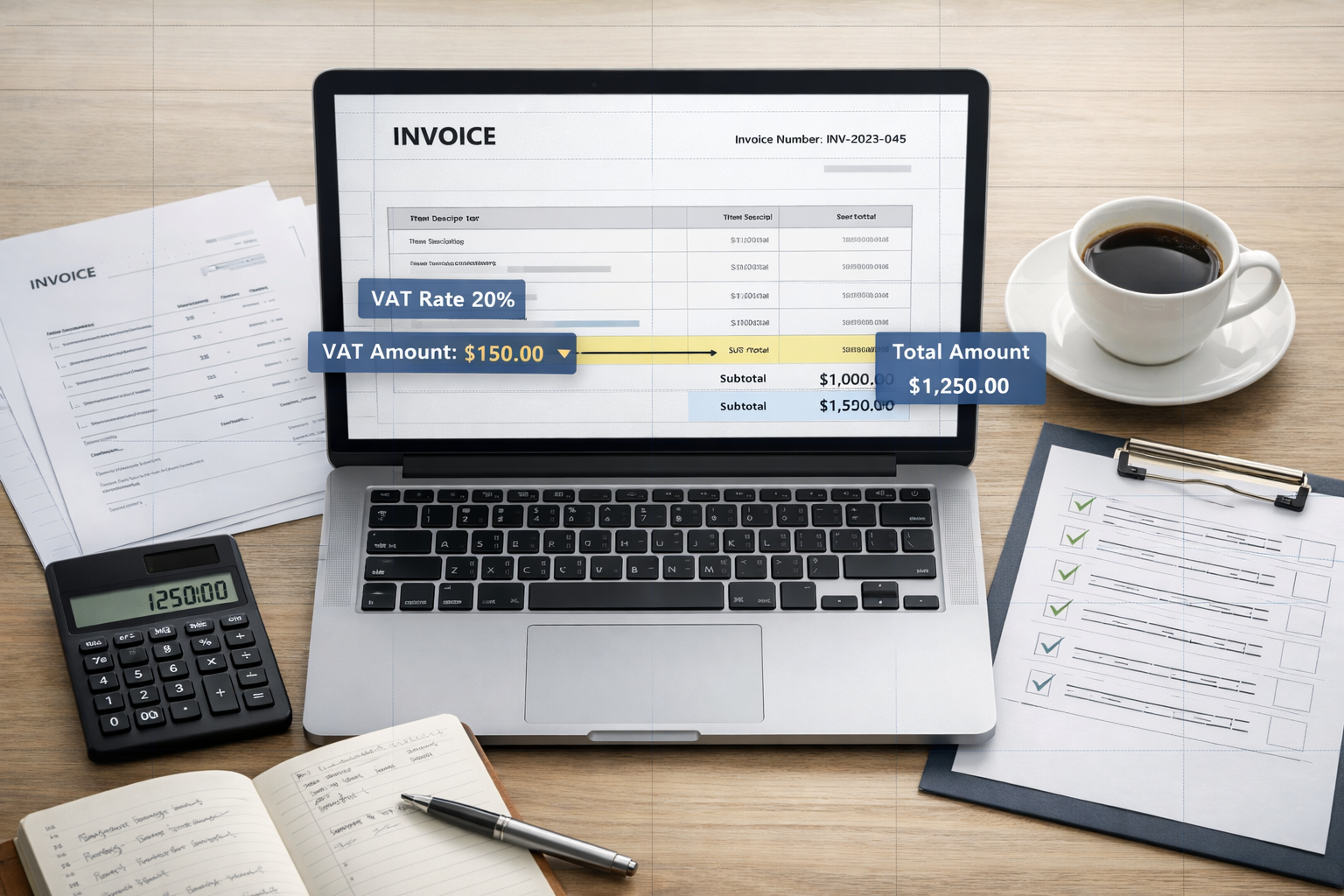
8. VAT Rate Applied

State the VAT rate charged (e.g., 20%, 21%).

Example:

VAT Rate: 20%

9. VAT Amount

Show the VAT amount separately from the net total.

Example:

VAT Amount: €400.00

10. Total Amount Payable (Including VAT)

The final amount the client must pay.

Example:

Total Payable: €2,400.00

VAT-Compliant Invoice Example (EU Freelancer to EU Business)

Scenario:
A VAT-registered freelancer in France provides services to a VAT-registered company in Germany. The reverse-charge mechanism applies.

Invoice Notes:

  • VAT is not charged
  • Both VAT numbers are included
  • A reverse-charge note is required

Sample VAT Text:

VAT reverse-charged under Article 44 and Article 196 of the EU VAT Directive

VAT Line:

VAT Rate: 0%
VAT Amount: €0.00

Reverse-Charge Mechanism Explained Simply

Under the reverse-charge mechanism:

  • The freelancer does not charge VAT
  • The client accounts for VAT in their own country

This usually applies when:

  • Both parties are VAT-registered
  • The freelancer and client are in different EU countries

Even though VAT is not charged, the invoice must still be VAT-compliant.

VAT-Compliant Invoice Example (Freelancer to EU Individual)

Scenario:
A freelancer in Spain provides design services to a private individual in Italy.

Key Points:

  • VAT must be charged at the freelancer’s local VAT rate
  • No reverse charge applies

Example VAT Line:

VAT Rate: 21%
VAT Amount: €315.00

Common VAT Invoicing Mistakes Freelancers Make

  1. Missing VAT numbers
  2. Using incorrect VAT rates
  3. Forgetting reverse-charge wording
  4. Issuing invoices in the wrong currency without clarification
  5. Reusing invoice numbers

Any of these can cause payment delays or compliance issues.

How Merchant of Record (MoR) Services Help Freelancers

Managing VAT correctly becomes more complex when freelancers:

  • Work with multiple EU countries
  • Serve both businesses and individuals
  • Handle different VAT rates and rules

This is where a Merchant of Record service like Remotify becomes valuable.

What Remotify Does as a Merchant of Record

As a Merchant of Record, Remotify:

  • Becomes the legal seller to the end customer
  • Handles VAT calculation, collection, and remittance
  • Issues with fully VAT-compliant invoices
  • Manages refunds and chargebacks
  • Ensures PCI and tax compliance

For freelancers, this means:

  • No need to worry about VAT rules across Europe
  • No need to register for VAT in multiple countries
  • More time to focus on client work and growth

VAT Compliance Without the Administrative Burden

While freelancers can choose to manage VAT themselves, the administrative work increases quickly as client locations expand. Mistakes are costly and time-consuming to fix.

Using a Merchant of Record allows freelancers to operate internationally while staying compliant without building their own payment and tax infrastructure.

Final Thoughts

A VAT-compliant invoice is not just a formality- it is a legal requirement for freelancers operating in Europe. Understanding what information must be included, when VAT applies, and how to handle cross-border transactions is essential for smooth payments and long-term business stability.

For freelancers who want to scale without managing VAT complexity, working with a Merchant of Record like Remotify can remove compliance stress and allow them to focus on delivering great work.

Disclaimer: This article is for informational purposes only and does not constitute tax or legal advice.

Freelancers across Europe often work with clients in different countries, currencies, and legal systems. While the work itself may be creative or technical, invoicing is a legal and financial task that must be handled carefully- especially when Value Added Tax (VAT) is involved.

If you issue invoices that are not VAT-compliant, you risk delayed payments, rejected invoices, penalties from tax authorities, or issues during audits.

VAT (Value Added Tax) is a consumption tax applied to goods and services in most European countries. While the customer ultimately pays VAT, the responsibility for charging, collecting, and reporting it usually falls on the seller- in this case, the freelancer.

For freelancers, VAT matters because:

  • Many EU countries require VAT-registered freelancers to issue VAT-compliant invoices
  • Clients often refuse to pay invoices that do not meet VAT standards
  • Incorrect VAT handling can result in fines, back taxes, or legal notices

Whether or not you need to charge VAT depends on several factors, including:

  • Your country of residence
  • Your VAT registration status
  • Your client’s location
  • Whether your client is a business or an individual

A VAT-compliant invoice is an invoice that includes all the information required by VAT laws in the relevant jurisdiction. In the European Union, VAT invoicing requirements are broadly harmonised, though some local variations exist.

In simple terms, a VAT-compliant invoice clearly shows:

  • Who is selling
  • Who is buying
  • What is being sold
  • How much VAT is charged (or why VAT is not charged)

If any required element is missing or incorrect, the invoice may be considered invalid for VAT purposes.

You typically need to issue VAT-compliant invoices if:

  • You are VAT-registered in your country
  • You provide services to clients in the EU
  • Your client needs the invoice for VAT reclaim or accounting

Even if you are not required to charge VAT (for example, under the reverse-charge mechanism), your invoice still needs to meet VAT documentation standards.

Below are the standard elements required on a VAT-compliant invoice under EU VAT Directive rules.

1. Invoice Number

Each invoice must have a unique, sequential invoice number. This helps tax authorities track transactions.

Example:

Invoice No: RM-2026-014

2. Invoice Issue Date

The date when the invoice is issued must be clearly stated.

Example:

Invoice Date: 10 March 2026

3. Supplier (Freelancer) Details

Your invoice must include:

  • Full legal name or registered business name
  • Business address
  • VAT identification number (if registered)

Example:

Supplier: Jane Doe Consulting
Address: 12 Rue de Lyon, 75012 Paris, France
VAT ID: FR123456789

4. Customer Details

Include your client’s:

  • Legal name or company name
  • Registered address
  • VAT number (if applicable)

Example:

Customer: ABC Software GmbH
Address: Friedrichstraße 45, 10117 Berlin, Germany
VAT ID: DE987654321

5. Description of Services

The services provided must be described clearly and specifically.

Avoid vague terms like “professional services.”

Example:

Description: Front-end web development services for March 2026

6. Date of Supply (If Different)

If the service was completed on a different date than the invoice date, this must be mentioned.

Example:

Date of Supply: 31 March 2026

7. Net Amount (Excluding VAT)

The total amount before VAT must be clearly shown.

Example:

Net Amount: €2,000.00

8. VAT Rate Applied

State the VAT rate charged (e.g., 20%, 21%).

Example:

VAT Rate: 20%

9. VAT Amount

Show the VAT amount separately from the net total.

Example:

VAT Amount: €400.00

10. Total Amount Payable (Including VAT)

The final amount the client must pay.

Example:

Total Payable: €2,400.00
Scenario:
A VAT-registered freelancer in France provides services to a VAT-registered company in Germany. The reverse-charge mechanism applies.

Invoice Notes:

  • VAT is not charged
  • Both VAT numbers are included
  • A reverse-charge note is required

Sample VAT Text:

VAT reverse-charged under Article 44 and Article 196 of the EU VAT Directive

VAT Line:

VAT Rate: 0%
VAT Amount: €0.00

Under the reverse-charge mechanism:

  • The freelancer does not charge VAT
  • The client accounts for VAT in their own country

This usually applies when:

  • Both parties are VAT-registered
  • The freelancer and client are in different EU countries

Even though VAT is not charged, the invoice must still be VAT-compliant.

Scenario:
A freelancer in Spain provides design services to a private individual in Italy.

Key Points:

  • VAT must be charged at the freelancer’s local VAT rate
  • No reverse charge applies

Example VAT Line:

VAT Rate: 21%
VAT Amount: €315.00

  1. Missing VAT numbers
  2. Using incorrect VAT rates
  3. Forgetting reverse-charge wording
  4. Issuing invoices in the wrong currency without clarification
  5. Reusing invoice numbers

Any of these can cause payment delays or compliance issues.

Managing VAT correctly becomes more complex when freelancers:

  • Work with multiple EU countries
  • Serve both businesses and individuals
  • Handle different VAT rates and rules

This is where a Merchant of Record service like Remotify becomes valuable.

As a Merchant of Record, Remotify:

  • Becomes the legal seller to the end customer
  • Handles VAT calculation, collection, and remittance
  • Issues with fully VAT-compliant invoices
  • Manages refunds and chargebacks
  • Ensures PCI and tax compliance

For freelancers, this means:

  • No need to worry about VAT rules across Europe
  • No need to register for VAT in multiple countries
  • More time to focus on client work and growth

While freelancers can choose to manage VAT themselves, the administrative work increases quickly as client locations expand. Mistakes are costly and time-consuming to fix.

Using a Merchant of Record allows freelancers to operate internationally while staying compliant without building their own payment and tax infrastructure.

A VAT-compliant invoice is not just a formality- it is a legal requirement for freelancers operating in Europe. Understanding what information must be included, when VAT applies, and how to handle cross-border transactions is essential for smooth payments and long-term business stability.

For freelancers who want to scale without managing VAT complexity, working with a Merchant of Record like Remotify can remove compliance stress and allow them to focus on delivering great work.

Disclaimer: This article is for informational purposes only and does not constitute tax or legal advice.