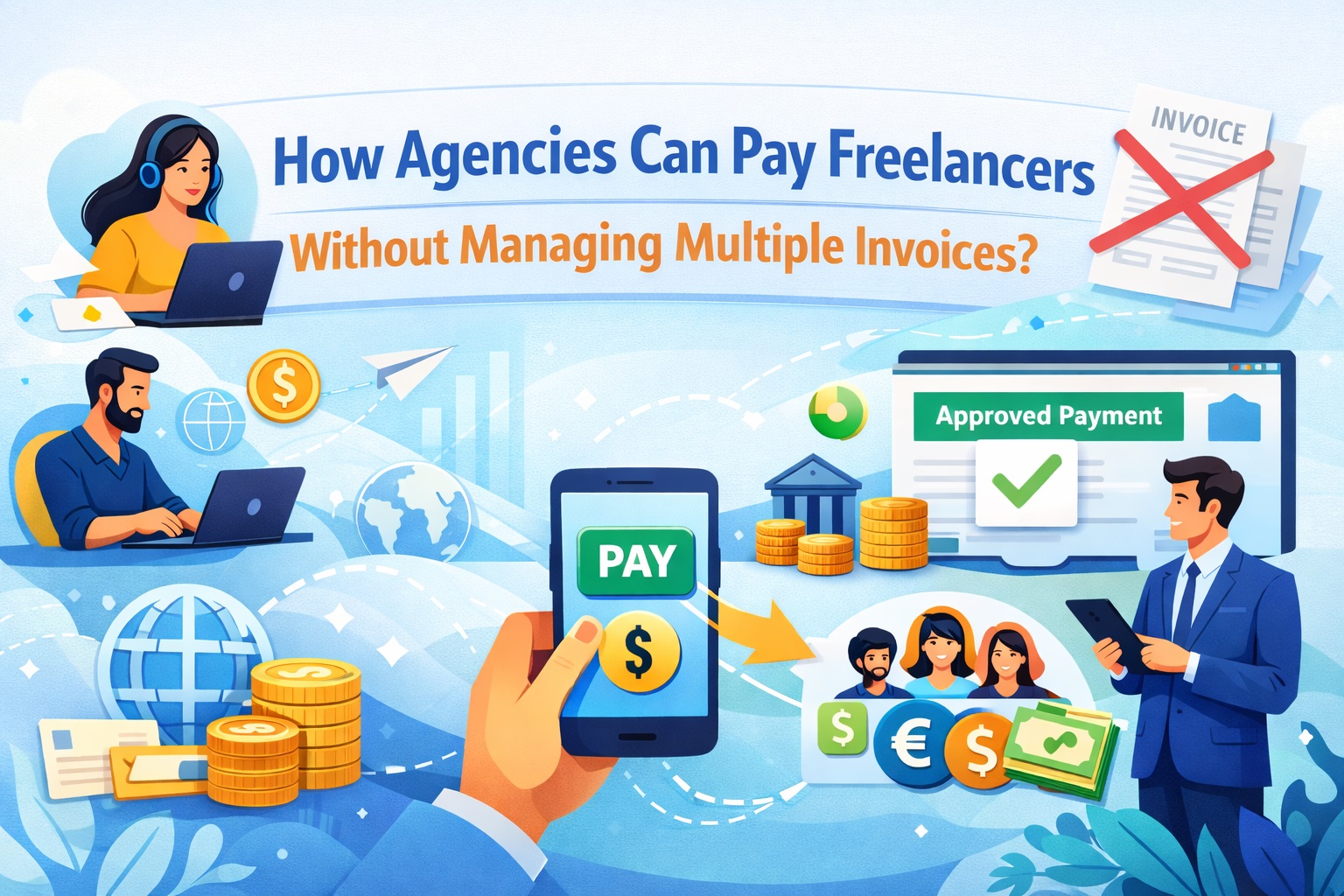
When Agencies managing multiple freelancers increase their services, the coordination of payment becomes more challenging. Every freelancer can work with the alternative currency, Invoicing format, paying period, or payment service. Finance departments have to confirm invoices, sum up totals, approve transfers, and document them to be audited.
This process results in when carried out by hand:
Due to these difficulties, several organizations are reconsidering the way that Agencies can pay freelancers without going through hundreds of spreadsheets and email chains.
Manual invoicing was efficient when there were few contractors that were employed by agencies. However, this strategy does not work in the long-term for businesses scaling remote teams. Before making payments, finance managers can spend hours verifying invoices, tracking down missing information, or translation of currencies.
Common bottlenecks include:
All these inefficiencies directly influence the speed at which Agencies can pay freelancers, which in turn influences project timelines and the retention of freelancers.
To address these challenges, the current platforms enable the agencies to automate the processes of onboarding, invoicing and payouts of the freelancers within one workflow. Agencies are also able to generate consolidated payment reports and effect bulk transfers instead of generating individual invoices.
This change is particularly useful to companies looking for invoice automations and Freelancer, in which case the financial departments desire the predictable and repeatable payment cycle without human touch.
Automation enables:
These tools allow the Agencies can pay freelancers at a higher rate, with increased accuracy and a much less administrative burden.
An optimized workflow of freelancer payments typically consists of:
Using this model, the Agencies can pay freelancers all over the world without having to balance dozens of documents.
You might require a superior system because:
Businesses scaling remote teams should solve payment friction in the early stages to avoid key financial bottlenecks in the future.
In considering solutions, the agencies should take into consideration:
Hiring the appropriate system guarantees that the implementation of freelancers by the authorities will go seamlessly without any faults in budgets and approvals.
Payment efficiency is not just an accounting enhancement, it is also a growth enabler. The agencies through which freelancers are paid out can:
Ultimately, when Agencies can pay freelancers without operational friction, they unlock true scalability in the remote work era.
The collaboration with freelancers is no longer an option of the modern agency, but a necessity. However, manual invoice management causes delays, confusion, and workload. With automated payment processes, agencies can save time, improve precision and transparency. Most importantly, Agencies can pay freelancers reliably and at scale, allowing teams to focus on delivering exceptional work instead of chasing paperwork.
When your agency is willing to streamline the process of payments to freelancers, consider platforms that will automate onboarding, invoicing, and international payments. Remotify assists agencies to handle remote talent, streamline compliance, and make secure bulk payments hence you can grow your business without administrative bottlenecks.
Learn how an intelligent payment process can save time, eliminate errors and deliver a more enjoyable experience to your team and your freelancers.
Because each freelancer may use different formats, currencies, and billing cycles, manual tracking becomes time-consuming and error-prone.
Yes, automated payment platforms allow bulk approvals and payouts, eliminating the need to process invoices individually.
Many modern tools create invoices based on tracked work or milestones, removing the need for freelancers to send separate documents.
It ensures timely payments, improves transparency, and reduces administrative workload, critical for distributed collaboration.
Most platforms store tax documents and payment records, helping agencies maintain compliance and audit readiness.
Global payout options, automated invoicing, bulk payments, compliance management, and clear reporting dashboards are key features to consider.
When Agencies managing multiple freelancers increase their services, the coordination of payment becomes more challenging. Every freelancer can work with the alternative currency, Invoicing format, paying period, or payment service. Finance departments have to confirm invoices, sum up totals, approve transfers, and document them to be audited.
This process results in when carried out by hand:
Due to these difficulties, several organizations are reconsidering the way that Agencies can pay freelancers without going through hundreds of spreadsheets and email chains.
Manual invoicing was efficient when there were few contractors that were employed by agencies. However, this strategy does not work in the long-term for businesses scaling remote teams. Before making payments, finance managers can spend hours verifying invoices, tracking down missing information, or translation of currencies.
Common bottlenecks include:
All these inefficiencies directly influence the speed at which Agencies can pay freelancers, which in turn influences project timelines and the retention of freelancers.
To address these challenges, the current platforms enable the agencies to automate the processes of onboarding, invoicing and payouts of the freelancers within one workflow. Agencies are also able to generate consolidated payment reports and effect bulk transfers instead of generating individual invoices.
This change is particularly useful to companies looking for invoice automations and Freelancer, in which case the financial departments desire the predictable and repeatable payment cycle without human touch.
Automation enables:
These tools allow the Agencies can pay freelancers at a higher rate, with increased accuracy and a much less administrative burden.
An optimized workflow of freelancer payments typically consists of:
Using this model, the Agencies can pay freelancers all over the world without having to balance dozens of documents.
You might require a superior system because:
Businesses scaling remote teams should solve payment friction in the early stages to avoid key financial bottlenecks in the future.
In considering solutions, the agencies should take into consideration:
Hiring the appropriate system guarantees that the implementation of freelancers by the authorities will go seamlessly without any faults in budgets and approvals.
Payment efficiency is not just an accounting enhancement, it is also a growth enabler. The agencies through which freelancers are paid out can:
Ultimately, when Agencies can pay freelancers without operational friction, they unlock true scalability in the remote work era.
The collaboration with freelancers is no longer an option of the modern agency, but a necessity. However, manual invoice management causes delays, confusion, and workload. With automated payment processes, agencies can save time, improve precision and transparency. Most importantly, Agencies can pay freelancers reliably and at scale, allowing teams to focus on delivering exceptional work instead of chasing paperwork.
When your agency is willing to streamline the process of payments to freelancers, consider platforms that will automate onboarding, invoicing, and international payments. Remotify assists agencies to handle remote talent, streamline compliance, and make secure bulk payments hence you can grow your business without administrative bottlenecks.
Learn how an intelligent payment process can save time, eliminate errors and deliver a more enjoyable experience to your team and your freelancers.
Because each freelancer may use different formats, currencies, and billing cycles, manual tracking becomes time-consuming and error-prone.
Yes, automated payment platforms allow bulk approvals and payouts, eliminating the need to process invoices individually.
Many modern tools create invoices based on tracked work or milestones, removing the need for freelancers to send separate documents.
It ensures timely payments, improves transparency, and reduces administrative workload, critical for distributed collaboration.
Most platforms store tax documents and payment records, helping agencies maintain compliance and audit readiness.
Global payout options, automated invoicing, bulk payments, compliance management, and clear reporting dashboards are key features to consider.