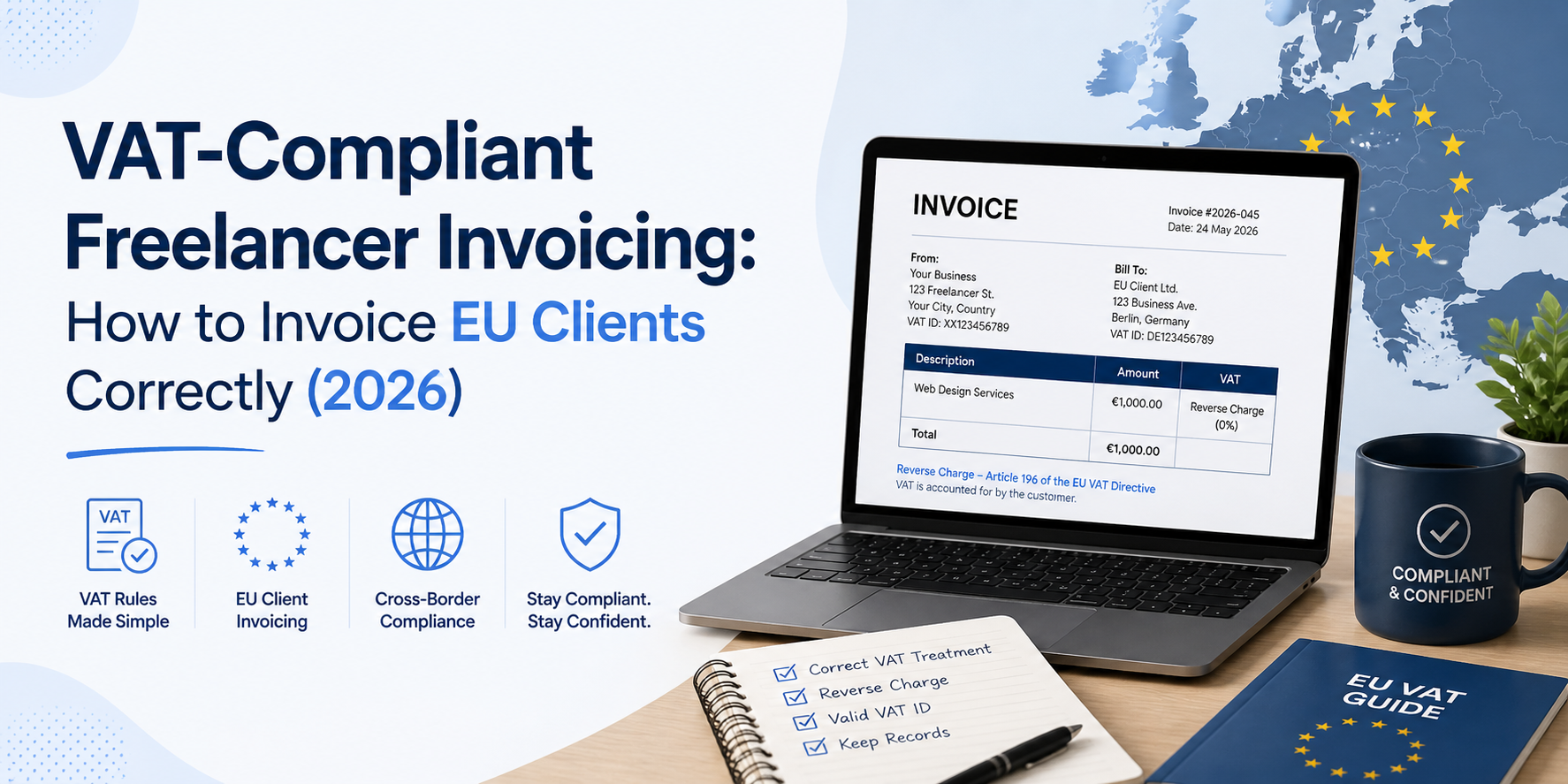
VAT-Compliant Freelancer Invoicing: How to Invoice EU Clients Correctly (2026)

VAT-Compliant Freelancer Invoicing is essential if you work with international clients. Different regions follow different tax rules, and sending the wrong type of invoice can delay payments or create compliance issues.

This Remotify’s guide explains how VAT-compliant freelancer invoicing works for EU, UK, and US clients, so you can invoice correctly in 2026.

VAT-compliant freelancer invoicing

Master Freelancer VAT Invoicing to Send EU-Compliant Invoices and Work Confidently With Global Clients

What Is VAT-Compliant Freelancer Invoicing?

VAT-Compliant Freelancer Invoicing refers to creating invoices that meet the legal tax requirements of your client’s country.

This involves:

  • Applying the correct VAT treatment
  • Including all mandatory invoice details
  • Using mechanisms like the reverse charge when required

If your invoices are not compliant, clients—especially businesses—may reject them, causing unnecessary delays.

VAT-Compliant Freelancer Invoicing by Region

EU Clients

For VAT-Compliant Freelancer Invoicing in the EU, rules depend on client type:

B2B (Business clients):

  • No VAT charged
  • Use reverse charge mechanism
  • Include both VAT numbers

B2C (Individual clients):

  • VAT may apply based on client’s country
  • Rates vary across EU

UK Clients

For VAT-Compliant Freelancer Invoicing in the UK:

  • Businesses → Usually reverse charge (no VAT)
  • Individuals → Often no VAT (export of services)

Correct wording on invoices is still required.

US Clients

For VAT-Compliant Freelancer Invoicing in the US:

  • No VAT system
  • Send a standard invoice
  • No VAT added

Key Elements of VAT-Compliant Freelancer Invoicing

To ensure VAT compliance, your invoice must include:

  • Your details
  • Client details
  • Invoice number and date
  • Service description
  • Total amount
  • VAT rate (if applicable)
  • VAT number (if applicable)
  • Reverse charge note (if required)

Common Mistakes in VAT-Compliant Freelancer Invoicing

  • Charging VAT incorrectly
  • Missing reverse charge note
  • Not validating VAT IDs
  • Using wrong country rules

How to Simplify VAT-Compliant Freelancer Invoicing

Handling VAT manually can be overwhelming, especially if you work with multiple countries. To simplify VAT-compliant freelancer invoicing, many freelancers:

  • Use invoicing platforms that automate VAT rules
  • Validate VAT numbers automatically
  • Generate compliant invoices instantly
  • Handle multi-currency payments

This reduces administrative work and helps ensure accuracy.

FAQ: VAT-Compliant Freelancer Invoicing

Do I need a VAT number to invoice EU clients?

Not always. For B2B invoices, reverse charge may apply. For B2C, VAT registration may be required depending on rules.

What is the reverse charge mechanism?

It shifts VAT responsibility to the client. You don’t charge VAT; the client reports it.

Do I charge VAT to US clients?

No. The US does not use VAT.

Conclusion

VAT-Compliant Freelancer Invoicing is essential for anyone working internationally. While the rules may seem complicated at first, they become manageable once you understand how they differ across the EU, UK, and US.

By following the correct VAT treatment, including all required invoice details, and avoiding common mistakes, you can ensure smooth payments and professional client relationships in 2026 and beyond with remotify.

VAT-Compliant Freelancer Invoicing refers to creating invoices that meet the legal tax requirements of your client’s country.

This involves:

  • Applying the correct VAT treatment
  • Including all mandatory invoice details
  • Using mechanisms like the reverse charge when required

If your invoices are not compliant, clients—especially businesses—may reject them, causing unnecessary delays.

EU Clients

For VAT-Compliant Freelancer Invoicing in the EU, rules depend on client type:

B2B (Business clients):

  • No VAT charged
  • Use reverse charge mechanism
  • Include both VAT numbers

B2C (Individual clients):

  • VAT may apply based on client’s country
  • Rates vary across EU

UK Clients

For VAT-Compliant Freelancer Invoicing in the UK:

  • Businesses → Usually reverse charge (no VAT)
  • Individuals → Often no VAT (export of services)

Correct wording on invoices is still required.

US Clients

For VAT-Compliant Freelancer Invoicing in the US:

  • No VAT system
  • Send a standard invoice
  • No VAT added

To ensure VAT compliance, your invoice must include:

  • Your details
  • Client details
  • Invoice number and date
  • Service description
  • Total amount
  • VAT rate (if applicable)
  • VAT number (if applicable)
  • Reverse charge note (if required)

  • Charging VAT incorrectly
  • Missing reverse charge note
  • Not validating VAT IDs
  • Using wrong country rules

Handling VAT manually can be overwhelming, especially if you work with multiple countries. To simplify VAT-compliant freelancer invoicing, many freelancers:

  • Use invoicing platforms that automate VAT rules
  • Validate VAT numbers automatically
  • Generate compliant invoices instantly
  • Handle multi-currency payments

This reduces administrative work and helps ensure accuracy.

Do I need a VAT number to invoice EU clients?

Not always. For B2B invoices, reverse charge may apply. For B2C, VAT registration may be required depending on rules.

What is the reverse charge mechanism?

It shifts VAT responsibility to the client. You don’t charge VAT; the client reports it.

Do I charge VAT to US clients?

No. The US does not use VAT.

VAT-Compliant Freelancer Invoicing is essential for anyone working internationally. While the rules may seem complicated at first, they become manageable once you understand how they differ across the EU, UK, and US.

By following the correct VAT treatment, including all required invoice details, and avoiding common mistakes, you can ensure smooth payments and professional client relationships in 2026 and beyond with remotify.