...

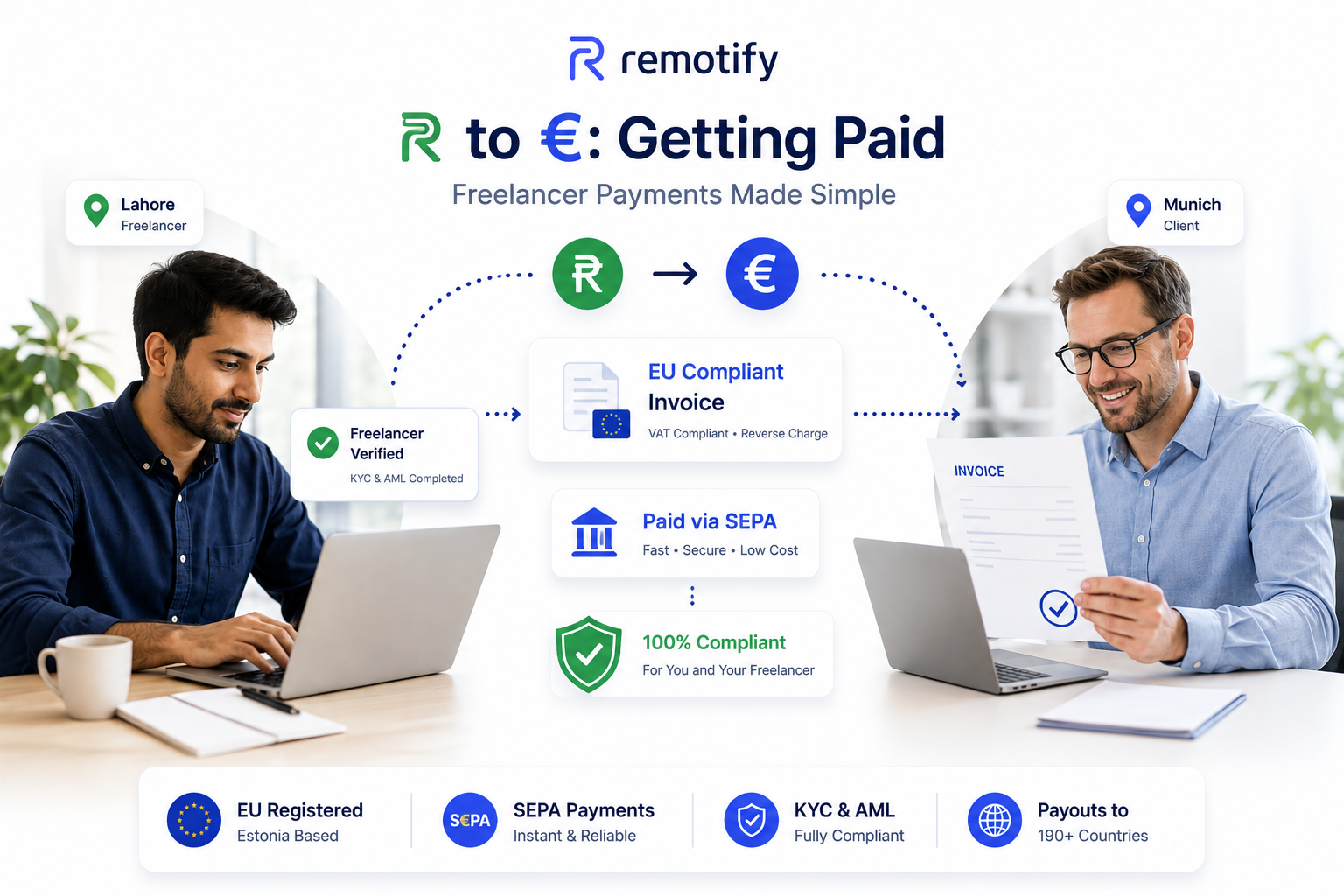
₨ to €: Getting Paid by a German Client as a Freelancer from Pakistan

A freelancer based in Lahore. A client in Munich. A project completed on time and to spec. And then the question that stops the payment in its tracks: “Can you send us a proper invoice?”

German Client

The project was easy. The payment was the part nobody warned me about." — Every freelancer working with international clients

The Setup

A mid-sized German marketing firm needed a freelance content strategist for a three-month campaign. They found the right person based in Pakistan. The deliverables were clear, the timeline agreed, the rate settled at €3,500.

Then came the paperwork.

The German company’s finance team sent a standard supplier onboarding form. It asked for a company registration number, a VAT ID, and an EU-compliant invoice.

The freelancer had none of those things. Just a strong portfolio, a personal bank account, and work already done.

The Problem With Getting Paid Directly

Sending €3,500 via SWIFT to a personal Pakistani bank account sounds straightforward. For the German company, it is anything but.

  1.   No valid invoice. Pakistani personal invoices carry no VAT number and no EU registration. For the German company’s Finanzamt filing, paying an unregistered foreign individual means extra justification, added scrutiny, and potential complications at audit time.
  2.   SWIFT transfers are expensive and slow. A cross-border SWIFT payment to Pakistan typically takes three to five business days. Banks on both ends take fees. The freelancer receives less than agreed, and neither side knows exactly how much less until the money lands.
  3.   Compliance flags. German companies are required to conduct due diligence on the entities they pay. Sending money to an unverified individual in a non-EU country without any KYC documentation creates a problem for the finance team, even on a project of this size.
  4.   Tax complexity on both sides. Without a proper intermediary, both parties are left to navigate an awkward grey area — the German company unsure how to categorise the payment, the Pakistani freelancer unsure how to declare it.

Why They Chose Remotify

Remotify resolved every one of those problems without requiring either party to change how they work.

A fully compliant EU invoice. Remotify is registered in Estonia, inside the European Union. When the Pakistani freelancer invoiced through Remotify, the German company received a VAT-compliant invoice from an EU-registered entity. Reverse charge applied correctly. The finance team processed it like any other supplier payment.

SEPA instead of SWIFT. Because Remotify holds a European bank account, the German company transferred the funds via SEPA. The money moved within the hour. No SWIFT delays, no correspondent bank fees, no chasing.

KYC and AML are already handled. Remotify verifies every freelancer before they can receive a payment. The German company’s compliance team had nothing left to check — the due diligence was done.

The freelancer received the full amount. The €3,500 arrived in full. The freelancer could hold it in EUR or convert to Pakistani Rupees. No surprise deductions, no bank fees absorbed on their end.

What This Means for Your Business

If you are a European company working with freelancers in Pakistan, India, Bangladesh, or anywhere outside the EU, this situation is not unusual. The work is good. The agreement is clear. The payment becomes the obstacle.

Remotify removes that obstacle entirely.

Your supplier is an EU-registered entity — invoice is clean, VAT is handled.

You pay via SEPA — fast, cheap, and familiar to your finance team.

KYC and AML are completed — your compliance team has nothing to chase.

The freelancer receives their full payment, in their currency, without waiting.

Whether your freelancer is in Karachi, Lahore, or Islamabad, if they work through Remotify, you pay like you are paying any European supplier.

Frequently Asked Questions

Does the freelancer need a registered company to use Remotify?

No. That is the point. Remotify acts as the legal intermediary. The freelancer invoices through Remotify’s EU entity, so neither party needs a registered business or local tax ID to make the transaction work.

How fast does the payment arrive?

If the German company pays via SEPA, the funds typically arrive within the hour. No SWIFT delays, no intermediary banks.

Is Remotify compliant with EU regulations?

Yes. Remotify is registered in Estonia and operates under EU financial regulations. All freelancers go through KYC and AML verification before receiving payments.

What currencies can the freelancer receive?

Freelancers can receive payments in EUR or convert to their local currency. Remotify supports payouts to 190+ countries.

What does it cost?

Remotify charges a small fee on the net invoice amount — no hidden charges, no setup fees. The freelancer sees exactly what they will receive before sending the invoice.

A mid-sized German marketing firm needed a freelance content strategist for a three-month campaign. They found the right person based in Pakistan. The deliverables were clear, the timeline agreed, the rate settled at €3,500.

Then came the paperwork.

The German company’s finance team sent a standard supplier onboarding form. It asked for a company registration number, a VAT ID, and an EU-compliant invoice.

The freelancer had none of those things. Just a strong portfolio, a personal bank account, and work already done.

Sending €3,500 via SWIFT to a personal Pakistani bank account sounds straightforward. For the German company, it is anything but.

  1.   No valid invoice. Pakistani personal invoices carry no VAT number and no EU registration. For the German company’s Finanzamt filing, paying an unregistered foreign individual means extra justification, added scrutiny, and potential complications at audit time.
  2.   SWIFT transfers are expensive and slow. A cross-border SWIFT payment to Pakistan typically takes three to five business days. Banks on both ends take fees. The freelancer receives less than agreed, and neither side knows exactly how much less until the money lands.
  3.   Compliance flags. German companies are required to conduct due diligence on the entities they pay. Sending money to an unverified individual in a non-EU country without any KYC documentation creates a problem for the finance team, even on a project of this size.
  4.   Tax complexity on both sides. Without a proper intermediary, both parties are left to navigate an awkward grey area — the German company unsure how to categorise the payment, the Pakistani freelancer unsure how to declare it.

Remotify resolved every one of those problems without requiring either party to change how they work.

A fully compliant EU invoice. Remotify is registered in Estonia, inside the European Union. When the Pakistani freelancer invoiced through Remotify, the German company received a VAT-compliant invoice from an EU-registered entity. Reverse charge applied correctly. The finance team processed it like any other supplier payment.

SEPA instead of SWIFT. Because Remotify holds a European bank account, the German company transferred the funds via SEPA. The money moved within the hour. No SWIFT delays, no correspondent bank fees, no chasing.

KYC and AML are already handled. Remotify verifies every freelancer before they can receive a payment. The German company’s compliance team had nothing left to check — the due diligence was done.

The freelancer received the full amount. The €3,500 arrived in full. The freelancer could hold it in EUR or convert to Pakistani Rupees. No surprise deductions, no bank fees absorbed on their end.

If you are a European company working with freelancers in Pakistan, India, Bangladesh, or anywhere outside the EU, this situation is not unusual. The work is good. The agreement is clear. The payment becomes the obstacle.

Remotify removes that obstacle entirely.

Your supplier is an EU-registered entity — invoice is clean, VAT is handled.

You pay via SEPA — fast, cheap, and familiar to your finance team.

KYC and AML are completed — your compliance team has nothing to chase.

The freelancer receives their full payment, in their currency, without waiting.

Whether your freelancer is in Karachi, Lahore, or Islamabad, if they work through Remotify, you pay like you are paying any European supplier.

Does the freelancer need a registered company to use Remotify?

No. That is the point. Remotify acts as the legal intermediary. The freelancer invoices through Remotify’s EU entity, so neither party needs a registered business or local tax ID to make the transaction work.

How fast does the payment arrive?

If the German company pays via SEPA, the funds typically arrive within the hour. No SWIFT delays, no intermediary banks.

Is Remotify compliant with EU regulations?

Yes. Remotify is registered in Estonia and operates under EU financial regulations. All freelancers go through KYC and AML verification before receiving payments.

What currencies can the freelancer receive?

Freelancers can receive payments in EUR or convert to their local currency. Remotify supports payouts to 190+ countries.

What does it cost?

Remotify charges a small fee on the net invoice amount — no hidden charges, no setup fees. The freelancer sees exactly what they will receive before sending the invoice.

Seraphinite AcceleratorOptimized by Seraphinite Accelerator
Turns on site high speed to be attractive for people and search engines.