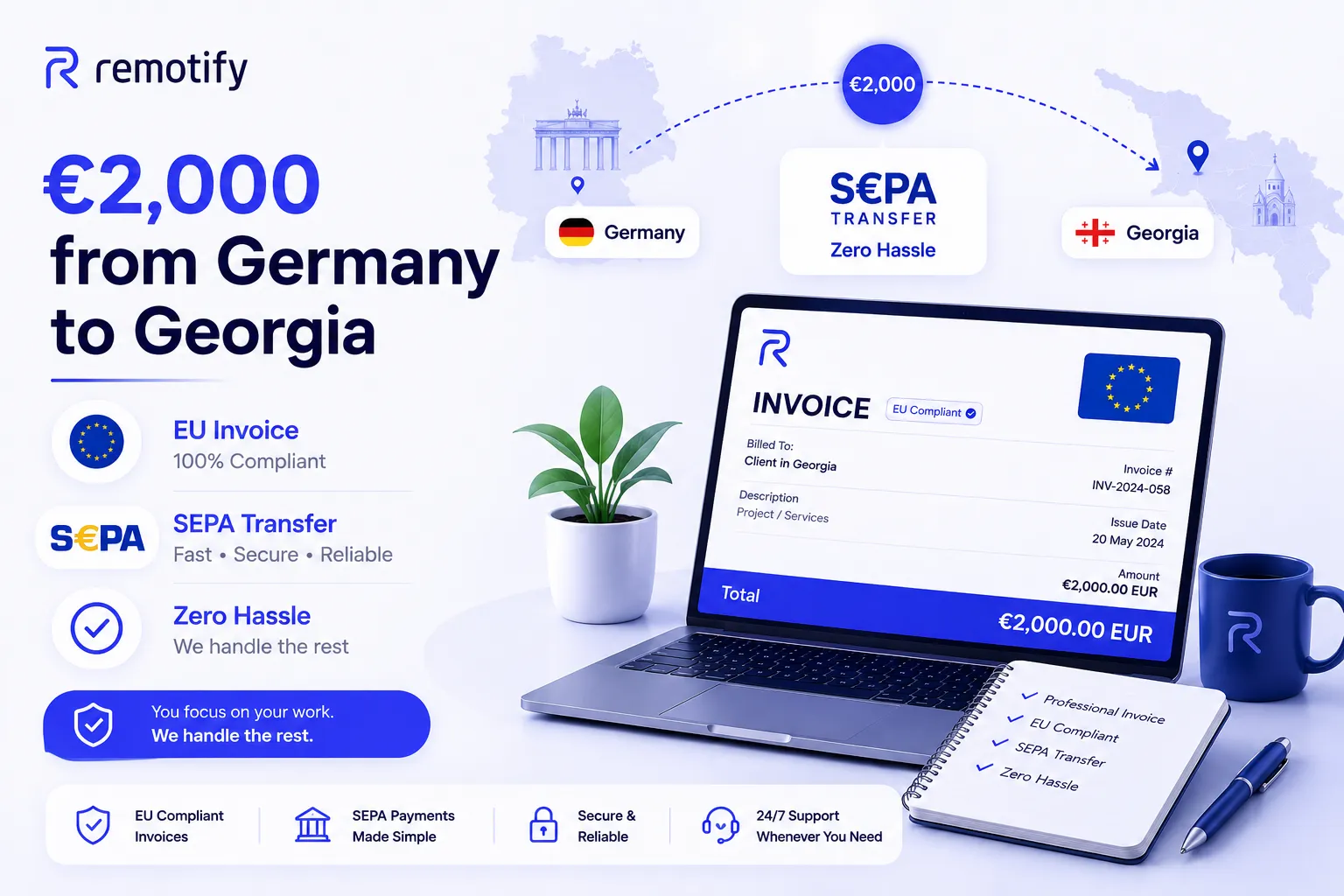
€2,000 from Germany to Georgia, EU Invoice, SEPA Transfer, Zero Hassle

A German design agency. A Georgian freelancer. One project. €2,000. And a payment that needed to work, cleanly, quickly, and without anyone’s accountant asking questions.

Need to invoice EU clients without setting up a company? Let Remotify handle compliant invoicing and payments, so you can focus on your work.

The Setup

A mid-sized German company needed a freelance graphic designer for a one-off project. They found the right person, based in Georgia. The work was good, the price was agreed: €2,000.

Then came the practical question: how do you actually pay them?

The designer didn’t have a registered company. They had a personal bank account in Georgia and the skills to do the job. That’s it.

The German company’s accountant flagged it immediately: “We need a proper invoice. VAT-compliant. From a registered entity.”

A Georgian personal invoice wasn’t going to cut it.

The Problem With Paying Directly

Sending €2,000 via SWIFT to a personal Georgian bank account sounds simple. But for a German company, it creates a chain of problems:

  1. No valid invoice Georgian personal invoices don’t include a VAT number. For the German accountant, this means extra work, explaining to the Finanzamt why they paid an unregistered individual abroad. More paperwork, more risk.
  2. SWIFT is slow and expensive Cross-border SWIFT transfers to Georgia take 2–5 business days. Banks on both sides take fees. The freelancer receives less than agreed. Nobody’s happy.
  3. Compliance questions Who is this person? Has anyone done KYC? AML checks? For a German company’s finance team, paying an unverified individual in a non-EU country raises flags, even for a small project.
  4. One-off project, maximum friction This wasn’t an ongoing relationship. It was one project. The German company didn’t want to spend more time on the payment than on the actual work.

Why They Chose Remotify

Remotify solved every single one of those problems, without the German company changing anything about how they normally pay suppliers.

A proper EU invoice Remotify is registered in Estonia, inside the EU. When the Georgian designer invoiced through Remotify, the German company received a fully VAT-compliant EU invoice. Reverse charge applied. The accountant was happy. The Finanzamt had nothing to question.

SEPA instead of SWIFT Because Remotify operates a European bank account, the German company paid via SEPA transfer. The money arrived in under an hour. No SWIFT delays, no correspondent bank fees, no “where’s my money?” messages from the freelancer.

KYC and AML, already done Remotify verifies every freelancer before they can receive a payment. By the time the German company sent the transfer, the Georgian designer was already verified. The compliance box was ticked, not by the German company’s legal team, but by Remotify.

The designer got paid in their currency The €2,000 landed as agreed. The designer could receive it in EUR or convert to Georgian Lari. No deductions, no surprise fees on their end.

What This Means for Your Business

If you’re a European company working with freelancers outside the EU, you’ve probably faced the same situation.

The freelancer is talented. The project is clear. The budget is agreed. But the payment becomes a project of its own, invoices that don’t meet your accounting standards, SWIFT transfers that take days, compliance questions that nobody has time to answer.

Remotify removes all of that.

  • Your supplier is an EU-registered entity, invoice is clean, VAT is handled
  • You pay via SEPA, fast, cheap, familiar
  • KYC and AML are done, your compliance team has nothing to chase
  • The freelancer gets paid in full, in their currency, without waiting

One project. One transfer. Zero friction.

Whether your freelancer is in Georgia, Pakistan, Egypt or anywhere else, if they work through Remotify, you pay like you’re paying any European supplier.

Frequently Asked Questions

Q1. Does the freelancer need a registered company to use Remotify?

No. That’s exactly the point. Remotify acts as the legal intermediary, the freelancer invoices through Remotify’s EU entity, so neither party needs to set up a company or deal with cross-border tax complexity.

Q2. How fast does the payment arrive?

If the German company pays via SEPA, the funds typically arrive within the hour. No SWIFT delays, no intermediary banks.

Q3. Is Remotify compliant with EU regulations?

Yes. Remotify is registered in Estonia and operates under EU financial regulations. All freelancers go through KYC and AML verification before receiving payments.

Q4. What currencies can the freelancer receive?

Freelancers can receive payments in EUR or convert to their local currency. Remotify supports payouts to 190+ countries.

Q5. What does it cost?

Remotify charges a small fee on the net invoice amount, no hidden charges, no setup fees. The freelancer sees exactly what they’ll receive before they send the invoice.

A mid-sized German company needed a freelance graphic designer for a one-off project. They found the right person, based in Georgia. The work was good, the price was agreed: €2,000.

Then came the practical question: how do you actually pay them?

The designer didn’t have a registered company. They had a personal bank account in Georgia and the skills to do the job. That’s it.

The German company’s accountant flagged it immediately: “We need a proper invoice. VAT-compliant. From a registered entity.”

A Georgian personal invoice wasn’t going to cut it.

Sending €2,000 via SWIFT to a personal Georgian bank account sounds simple. But for a German company, it creates a chain of problems:

  1. No valid invoice Georgian personal invoices don’t include a VAT number. For the German accountant, this means extra work, explaining to the Finanzamt why they paid an unregistered individual abroad. More paperwork, more risk.
  2. SWIFT is slow and expensive Cross-border SWIFT transfers to Georgia take 2–5 business days. Banks on both sides take fees. The freelancer receives less than agreed. Nobody’s happy.
  3. Compliance questions Who is this person? Has anyone done KYC? AML checks? For a German company’s finance team, paying an unverified individual in a non-EU country raises flags, even for a small project.
  4. One-off project, maximum friction This wasn’t an ongoing relationship. It was one project. The German company didn’t want to spend more time on the payment than on the actual work.

Remotify solved every single one of those problems, without the German company changing anything about how they normally pay suppliers.

A proper EU invoice Remotify is registered in Estonia, inside the EU. When the Georgian designer invoiced through Remotify, the German company received a fully VAT-compliant EU invoice. Reverse charge applied. The accountant was happy. The Finanzamt had nothing to question.

SEPA instead of SWIFT Because Remotify operates a European bank account, the German company paid via SEPA transfer. The money arrived in under an hour. No SWIFT delays, no correspondent bank fees, no “where’s my money?” messages from the freelancer.

KYC and AML, already done Remotify verifies every freelancer before they can receive a payment. By the time the German company sent the transfer, the Georgian designer was already verified. The compliance box was ticked, not by the German company’s legal team, but by Remotify.

The designer got paid in their currency The €2,000 landed as agreed. The designer could receive it in EUR or convert to Georgian Lari. No deductions, no surprise fees on their end.

If you’re a European company working with freelancers outside the EU, you’ve probably faced the same situation.

The freelancer is talented. The project is clear. The budget is agreed. But the payment becomes a project of its own, invoices that don’t meet your accounting standards, SWIFT transfers that take days, compliance questions that nobody has time to answer.

Remotify removes all of that.

  • Your supplier is an EU-registered entity, invoice is clean, VAT is handled
  • You pay via SEPA, fast, cheap, familiar
  • KYC and AML are done, your compliance team has nothing to chase
  • The freelancer gets paid in full, in their currency, without waiting

One project. One transfer. Zero friction.

Whether your freelancer is in Georgia, Pakistan, Egypt or anywhere else, if they work through Remotify, you pay like you’re paying any European supplier.

Q1. Does the freelancer need a registered company to use Remotify?

No. That’s exactly the point. Remotify acts as the legal intermediary, the freelancer invoices through Remotify’s EU entity, so neither party needs to set up a company or deal with cross-border tax complexity.

Q2. How fast does the payment arrive?

If the German company pays via SEPA, the funds typically arrive within the hour. No SWIFT delays, no intermediary banks.

Q3. Is Remotify compliant with EU regulations?

Yes. Remotify is registered in Estonia and operates under EU financial regulations. All freelancers go through KYC and AML verification before receiving payments.

Q4. What currencies can the freelancer receive?

Freelancers can receive payments in EUR or convert to their local currency. Remotify supports payouts to 190+ countries.

Q5. What does it cost?

Remotify charges a small fee on the net invoice amount, no hidden charges, no setup fees. The freelancer sees exactly what they’ll receive before they send the invoice.