...

How to Invoice International Clients Without a Company (And Stay Compliant)

You can invoice international clients without registering a company by using a platform like Remotify, which acts as the EU legal entity on your behalf, issues a VAT-compliant invoice to your client, and pays you once the transaction clears. You keep the freedom of freelancing without the legal grey areas that come with sending personal invoices across borders.

Invoice International Clients

Working globally shouldn't require incorporating a company. But invoicing globally still requires compliance.

The Problem With Sending Personal Invoices

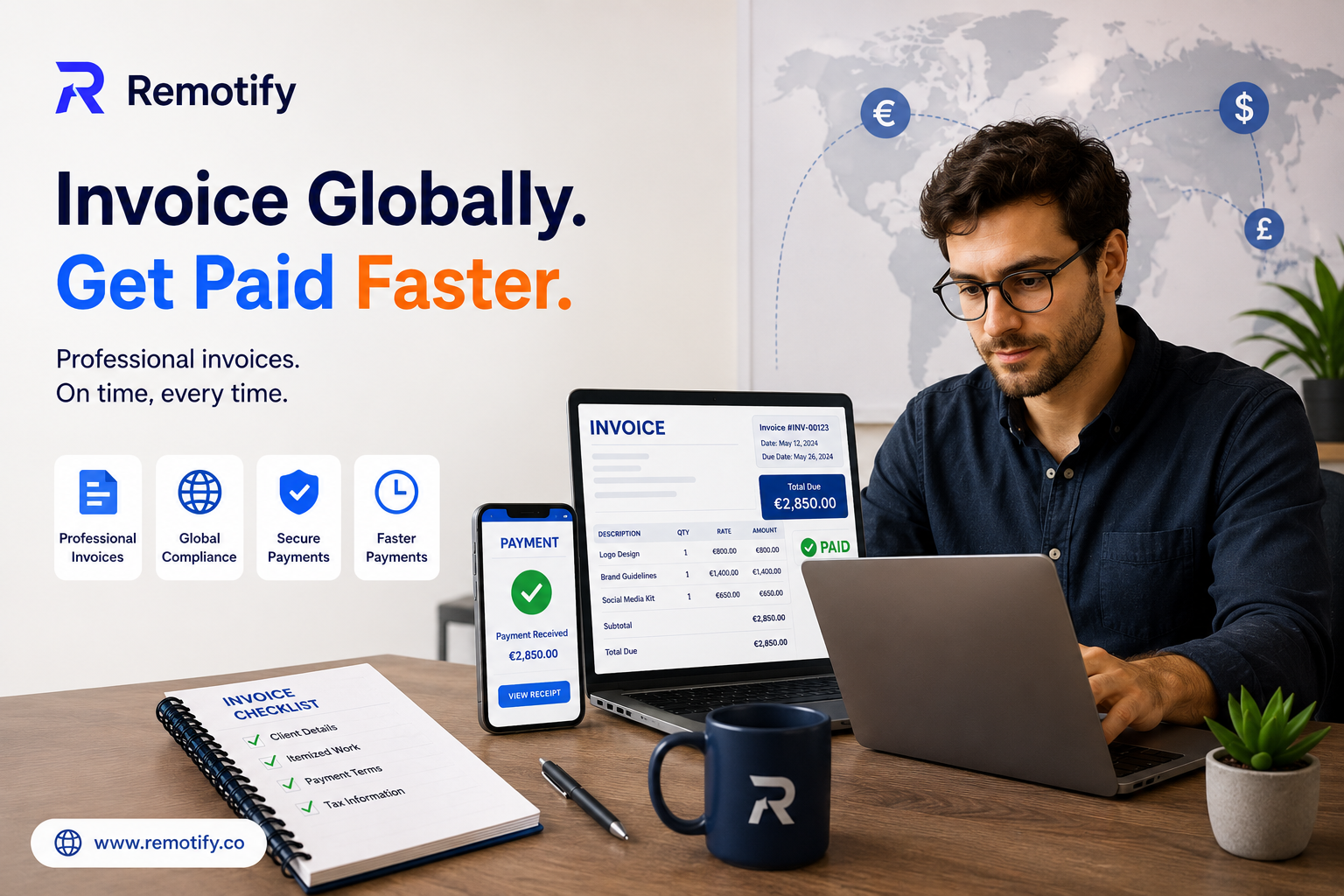
You land a client in Germany. Or the Netherlands. Or the US. They ask you to send an invoice so they can process payment. You open a Google Doc, type your name and bank details, and send it over.

It works, until it doesn’t.

Some clients accept informal invoices without much question. But for businesses that take their accounting seriously, especially EU-registered companies, a personal invoice creates real problems. Their finance team may reject it because it lacks a VAT number. Their legal team may flag it as a misclassification risk. And even if the payment goes through, you’re operating in a grey area that could come back to bite you at tax time.

The bigger issue: when you invoice directly as an individual, clients cannot always treat that payment cleanly in their books. Cross-border B2B transactions in the EU are subject to specific VAT rules, and a personal document with no registration number doesn’t satisfy those rules.

This isn’t about being penalised for doing freelance work. It’s about the gap between what clients need and what an unregistered freelancer can provide.

What a Compliant Invoice Actually Requires

A valid business invoice in the EU is not just a payment request. It’s a legal document. Depending on the transaction, it may need to include:

  • The issuing entity’s legal name and address
  • A VAT registration number (or a note explaining why VAT is not charged)
  • The client’s VAT number for B2B cross-border transactions
  • A clear description of the service provided
  • The invoice date and a unique invoice number
  • The applicable VAT treatment, including reverse charge language where relevant

Most freelancers working without a registered company cannot provide most of these. And that’s not a personal failing. It’s simply that the invoicing system was designed for registered businesses.

The reverse charge mechanism is particularly worth understanding. When an EU-based business purchases a service from outside their country, VAT is not charged on the invoice. Instead, the client self-reports and pays the VAT in their own country. This is called reverse charge, and it only applies when the supplier has a valid EU VAT number. Without one, the whole mechanism breaks down.

Why This Matters More Than It Used To

Tax authorities across the EU have been tightening the rules around platform-based and freelance work. One of the biggest regulatory shifts in recent years is DAC7, the EU directive that came into effect in 2023.

Under DAC7, digital platforms are required to report the earnings of freelancers and sellers who use their platform to EU tax authorities. This means that if you’re earning through platforms, your income is being documented and shared automatically, whether or not you’ve registered a company.

For freelancers working directly with business clients rather than through platforms, the compliance burden sits more directly on the client side. But the effect is the same: there is more scrutiny on cross-border freelance payments than there was five years ago, and that trend is not reversing.

Clients who care about their own compliance are increasingly asking for invoices from recognised legal entities, not just individuals. It reduces their exposure and makes their accounting cleaner.

How Remotify Solves This

Remotify is a Merchant of Record, incorporated in Estonia and registered in the EU. When you use Remotify to invoice a client, here is what actually happens:

  •       You submit your service details and the amount you are owed
  •       Remotify issues the invoice to your client as the EU legal entity
  •       Your client pays Remotify
  •       Remotify pays you via SEPA

The invoice your client receives is fully VAT-compliant and includes the correct reverse charge language for cross-border B2B transactions where applicable. Their finance team gets a clean, legally valid document. You get paid without needing a company of your own.

Remotify also handles KYC and AML verification as part of the onboarding process, which means your client’s compliance burden is reduced. They are not paying an unverified individual; they are transacting with a verified EU platform.

On the reporting side, Remotify manages DAC7 obligations, meaning the EU platform reporting requirements are handled within the platform rather than falling on you to navigate independently.

Your income tax in your home country remains your own responsibility. Remotify does not file local tax returns or deduct income tax on your behalf. That is an important distinction, and an honest one.

SEPA Payments: Why It Matters Where the Money Moves

One practical advantage that often gets overlooked is how the money actually arrives.

Traditional international bank transfers, particularly SWIFT payments, come with fees, delays, and correspondent bank charges that can quietly reduce your net payout. SEPA transfers, which move money within the Single Euro Payments Area, arrive within hours and carry significantly lower fees.

Because Remotify is EU-registered and pays you via SEPA, you avoid the cost and friction of cross-border SWIFT transfers when your client is based in Europe. For freelancers who do a consistent volume of work with EU clients, that adds up.

What About Freelancers Outside the EU?

You do not need to be based in the EU to use Remotify. The platform is designed for freelancers globally who work with international clients, particularly European businesses that need to receive invoices from a recognised EU entity.

If you are based in India, the UK, Southeast Asia, or anywhere outside the EU, and your clients are EU businesses who want clean, VAT-compliant invoices, Remotify handles the EU-facing side of that transaction. You focus on the work. The invoice is issued by Remotify as the EU legal entity, which is what your client needs.

Should You Register a Company Instead?

Sometimes, yes. If you are building a long-term business with employees, partners, or intellectual property you want to protect, registering a company makes sense. A legal entity gives you more control over contracts, equity, and liability.

But for freelancers who want to work with international clients now, without the overhead of incorporation, accounting software, annual filings, and a registered office, using a platform like Remotify is a faster and more practical route.

The decision often comes down to volume and ambition. High-volume freelancers with consistent clients in multiple countries may eventually benefit from incorporation. But getting there requires a track record, and building that track record is easier when you can invoice compliantly from day one.

Frequently Asked Questions

Can I invoice international clients without a registered company?

Yes. Using a platform like Remotify, you can invoice international clients without registering a company. Remotify acts as the EU legal entity, issues the invoice on your behalf, and pays you after the client settles the transaction.

Is it legal to invoice without a company?

Invoicing without a registered company is not illegal, but it creates compliance gaps, especially for EU business clients who need a VAT-compliant invoice to process the payment cleanly in their accounts. Using a Merchant of Record like Remotify removes that gap.

What is the VAT reverse charge and does it apply to me?

The VAT reverse charge is an EU mechanism where, on cross-border B2B transactions, the client self-reports VAT rather than paying it on the invoice. It requires the supplier to have a valid VAT number. When you invoice through Remotify, the reverse charge language is handled correctly on every invoice.

What is DAC7 and do I need to worry about it?

DAC7 is an EU directive requiring digital platforms to report seller and freelancer earnings to tax authorities. Remotify manages its DAC7 reporting obligations as a platform, so that compliance layer is handled within the system rather than being passed on to you.

How does Remotify pay me after my client pays?

Once your client pays Remotify, Remotify transfers your payment via SEPA. SEPA transfers typically arrive within hours and carry lower fees than international SWIFT transfers, making it a fast and cost-effective way to receive payment.

Does Remotify handle my income tax?

No. Your income tax in your home country remains your own responsibility. Remotify handles invoicing, VAT compliance, KYC verification, and DAC7 reporting, but it does not file tax returns or deduct income tax on your behalf.

Do I need to be based in the EU to use Remotify?

No. Remotify is available to freelancers worldwide. If your clients are EU-based businesses that need VAT-compliant invoices from an EU legal entity, Remotify handles that regardless of where you are located.

You land a client in Germany. Or the Netherlands. Or the US. They ask you to send an invoice so they can process payment. You open a Google Doc, type your name and bank details, and send it over.

It works, until it doesn’t.

Some clients accept informal invoices without much question. But for businesses that take their accounting seriously, especially EU-registered companies, a personal invoice creates real problems. Their finance team may reject it because it lacks a VAT number. Their legal team may flag it as a misclassification risk. And even if the payment goes through, you’re operating in a grey area that could come back to bite you at tax time.

The bigger issue: when you invoice directly as an individual, clients cannot always treat that payment cleanly in their books. Cross-border B2B transactions in the EU are subject to specific VAT rules, and a personal document with no registration number doesn’t satisfy those rules.

This isn’t about being penalised for doing freelance work. It’s about the gap between what clients need and what an unregistered freelancer can provide.

A valid business invoice in the EU is not just a payment request. It’s a legal document. Depending on the transaction, it may need to include:

  • The issuing entity’s legal name and address
  • A VAT registration number (or a note explaining why VAT is not charged)
  • The client’s VAT number for B2B cross-border transactions
  • A clear description of the service provided
  • The invoice date and a unique invoice number
  • The applicable VAT treatment, including reverse charge language where relevant

Most freelancers working without a registered company cannot provide most of these. And that’s not a personal failing. It’s simply that the invoicing system was designed for registered businesses.

The reverse charge mechanism is particularly worth understanding. When an EU-based business purchases a service from outside their country, VAT is not charged on the invoice. Instead, the client self-reports and pays the VAT in their own country. This is called reverse charge, and it only applies when the supplier has a valid EU VAT number. Without one, the whole mechanism breaks down.

Tax authorities across the EU have been tightening the rules around platform-based and freelance work. One of the biggest regulatory shifts in recent years is DAC7, the EU directive that came into effect in 2023.

Under DAC7, digital platforms are required to report the earnings of freelancers and sellers who use their platform to EU tax authorities. This means that if you’re earning through platforms, your income is being documented and shared automatically, whether or not you’ve registered a company.

For freelancers working directly with business clients rather than through platforms, the compliance burden sits more directly on the client side. But the effect is the same: there is more scrutiny on cross-border freelance payments than there was five years ago, and that trend is not reversing.

Clients who care about their own compliance are increasingly asking for invoices from recognised legal entities, not just individuals. It reduces their exposure and makes their accounting cleaner.

Remotify is a Merchant of Record, incorporated in Estonia and registered in the EU. When you use Remotify to invoice a client, here is what actually happens:

  •       You submit your service details and the amount you are owed
  •       Remotify issues the invoice to your client as the EU legal entity
  •       Your client pays Remotify
  •       Remotify pays you via SEPA

The invoice your client receives is fully VAT-compliant and includes the correct reverse charge language for cross-border B2B transactions where applicable. Their finance team gets a clean, legally valid document. You get paid without needing a company of your own.

Remotify also handles KYC and AML verification as part of the onboarding process, which means your client’s compliance burden is reduced. They are not paying an unverified individual; they are transacting with a verified EU platform.

On the reporting side, Remotify manages DAC7 obligations, meaning the EU platform reporting requirements are handled within the platform rather than falling on you to navigate independently.

Your income tax in your home country remains your own responsibility. Remotify does not file local tax returns or deduct income tax on your behalf. That is an important distinction, and an honest one.

One practical advantage that often gets overlooked is how the money actually arrives.

Traditional international bank transfers, particularly SWIFT payments, come with fees, delays, and correspondent bank charges that can quietly reduce your net payout. SEPA transfers, which move money within the Single Euro Payments Area, arrive within hours and carry significantly lower fees.

Because Remotify is EU-registered and pays you via SEPA, you avoid the cost and friction of cross-border SWIFT transfers when your client is based in Europe. For freelancers who do a consistent volume of work with EU clients, that adds up.

You do not need to be based in the EU to use Remotify. The platform is designed for freelancers globally who work with international clients, particularly European businesses that need to receive invoices from a recognised EU entity.

If you are based in India, the UK, Southeast Asia, or anywhere outside the EU, and your clients are EU businesses who want clean, VAT-compliant invoices, Remotify handles the EU-facing side of that transaction. You focus on the work. The invoice is issued by Remotify as the EU legal entity, which is what your client needs.

Sometimes, yes. If you are building a long-term business with employees, partners, or intellectual property you want to protect, registering a company makes sense. A legal entity gives you more control over contracts, equity, and liability.

But for freelancers who want to work with international clients now, without the overhead of incorporation, accounting software, annual filings, and a registered office, using a platform like Remotify is a faster and more practical route.

The decision often comes down to volume and ambition. High-volume freelancers with consistent clients in multiple countries may eventually benefit from incorporation. But getting there requires a track record, and building that track record is easier when you can invoice compliantly from day one.

Can I invoice international clients without a registered company?

Yes. Using a platform like Remotify, you can invoice international clients without registering a company. Remotify acts as the EU legal entity, issues the invoice on your behalf, and pays you after the client settles the transaction.

Is it legal to invoice without a company?

Invoicing without a registered company is not illegal, but it creates compliance gaps, especially for EU business clients who need a VAT-compliant invoice to process the payment cleanly in their accounts. Using a Merchant of Record like Remotify removes that gap.

What is the VAT reverse charge and does it apply to me?

The VAT reverse charge is an EU mechanism where, on cross-border B2B transactions, the client self-reports VAT rather than paying it on the invoice. It requires the supplier to have a valid VAT number. When you invoice through Remotify, the reverse charge language is handled correctly on every invoice.

What is DAC7 and do I need to worry about it?

DAC7 is an EU directive requiring digital platforms to report seller and freelancer earnings to tax authorities. Remotify manages its DAC7 reporting obligations as a platform, so that compliance layer is handled within the system rather than being passed on to you.

How does Remotify pay me after my client pays?

Once your client pays Remotify, Remotify transfers your payment via SEPA. SEPA transfers typically arrive within hours and carry lower fees than international SWIFT transfers, making it a fast and cost-effective way to receive payment.

Does Remotify handle my income tax?

No. Your income tax in your home country remains your own responsibility. Remotify handles invoicing, VAT compliance, KYC verification, and DAC7 reporting, but it does not file tax returns or deduct income tax on your behalf.

Do I need to be based in the EU to use Remotify?

No. Remotify is available to freelancers worldwide. If your clients are EU-based businesses that need VAT-compliant invoices from an EU legal entity, Remotify handles that regardless of where you are located.

Seraphinite AcceleratorOptimized by Seraphinite Accelerator
Turns on site high speed to be attractive for people and search engines.